
Why an Organized Home Doesn't Just Save Time—It Gives Your Brain Room to Breathe
By July, life has settled into a different rhythm.
Calendars fill with vacations, backyard dinners, and weekends at the lake. Adult children stop by more often, grandchildren fill the house with laughter, and many families find themselves embracing a new kind of
multigenerational living—where parents increasingly lean on grandparents for an extra set of hands in an ever-busier world.
The home becomes more than a place to live.
It becomes a place to gather, prepare meals, host overnight guests, fold tiny towels, pack lunches, and create memories between generations.
It's beautiful.
It's meaningful.
And sometimes... it's wonderfully overwhelming.
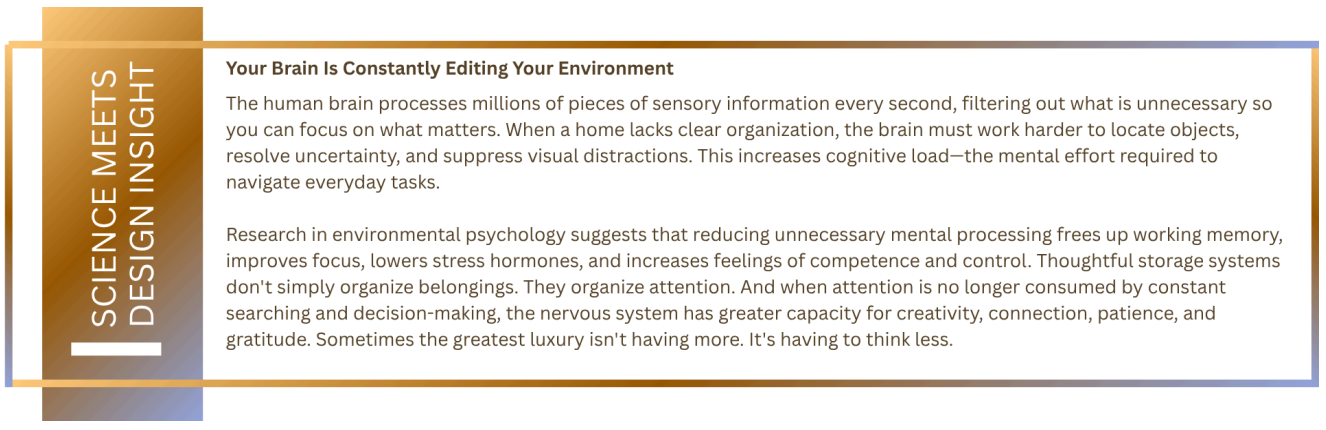
During seasons like this, many homeowners instinctively begin clearing countertops, organizing pantries, and simplifying routines. It isn't because they're striving for perfection. It's because when life becomes beautifully complex, the brain naturally begins searching for order. And that instinct isn't simply about organization.
It's biology.
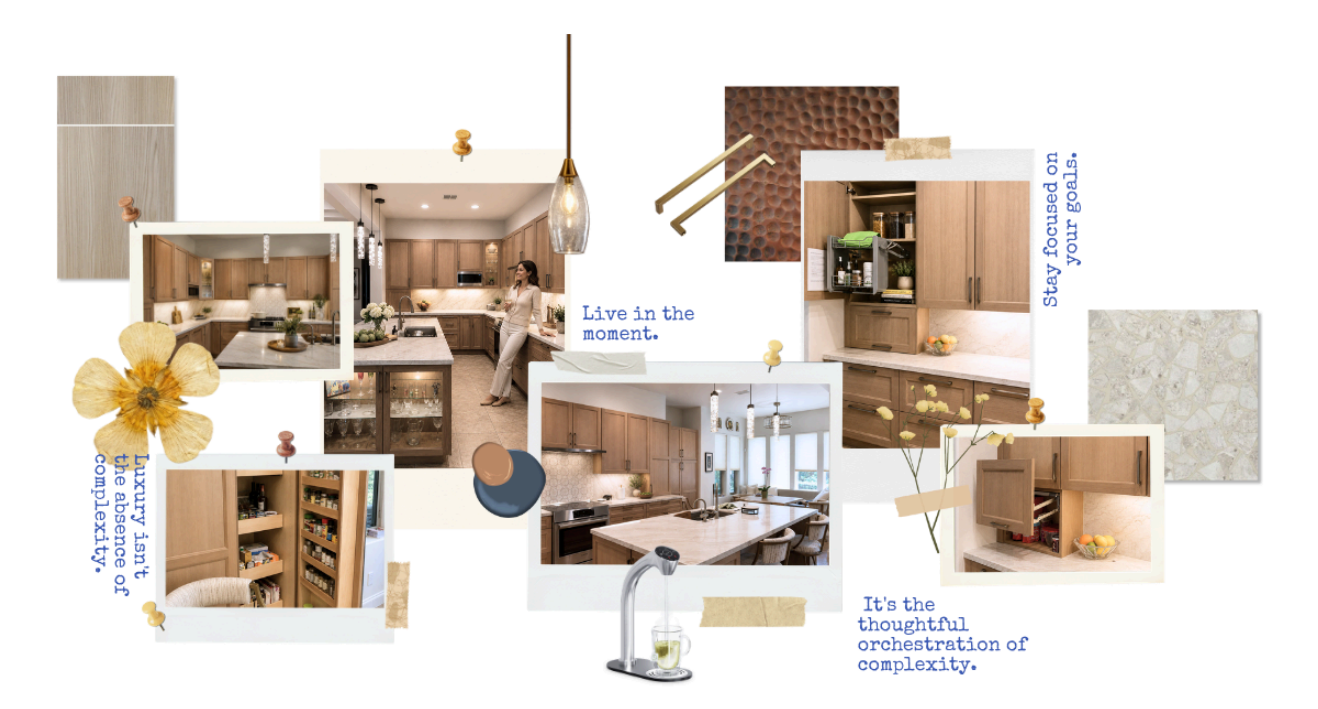
One of the most compelling principles in biophilic design is Complexity & Order, the understanding that humans thrive in environments rich with information, provided that information is organized in ways our brains can effortlessly understand.
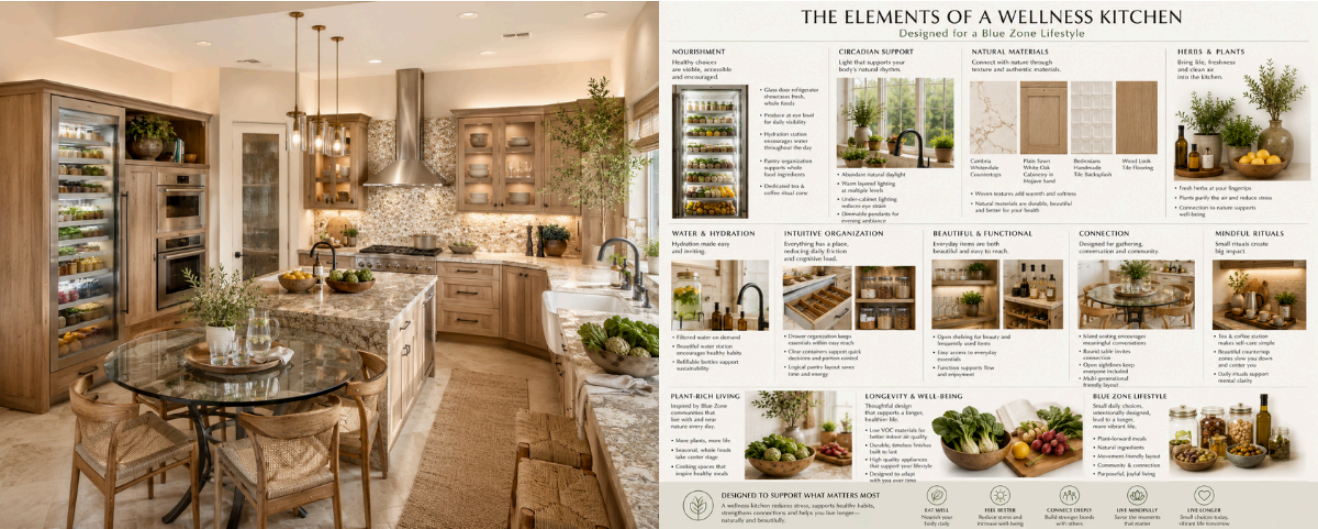
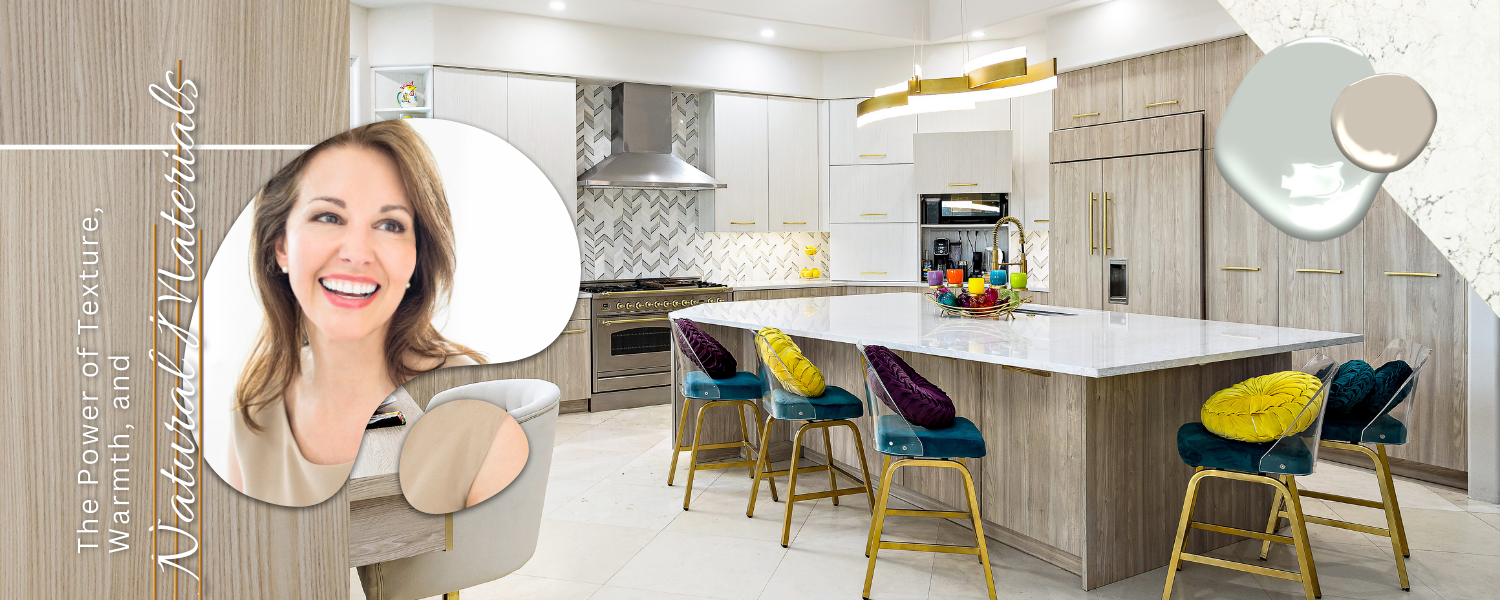
Nowhere does that matter more than the kitchen and bathroom, the two spaces that quietly support nearly every rhythm of family life.