The Sanctuary Bath: Designing the Exhale
Few rooms are better suited to Refuge than the primary bathroom.
The bathroom is one of the rare spaces in our homes where closing the door is not only accepted—it is expected. It marks a temporary separation from the demands occurring on the other side.
That makes bathroom design about more than selecting beautiful tile and plumbing fixtures. It presents an opportunity to create a genuine transition from
activity to restoration.
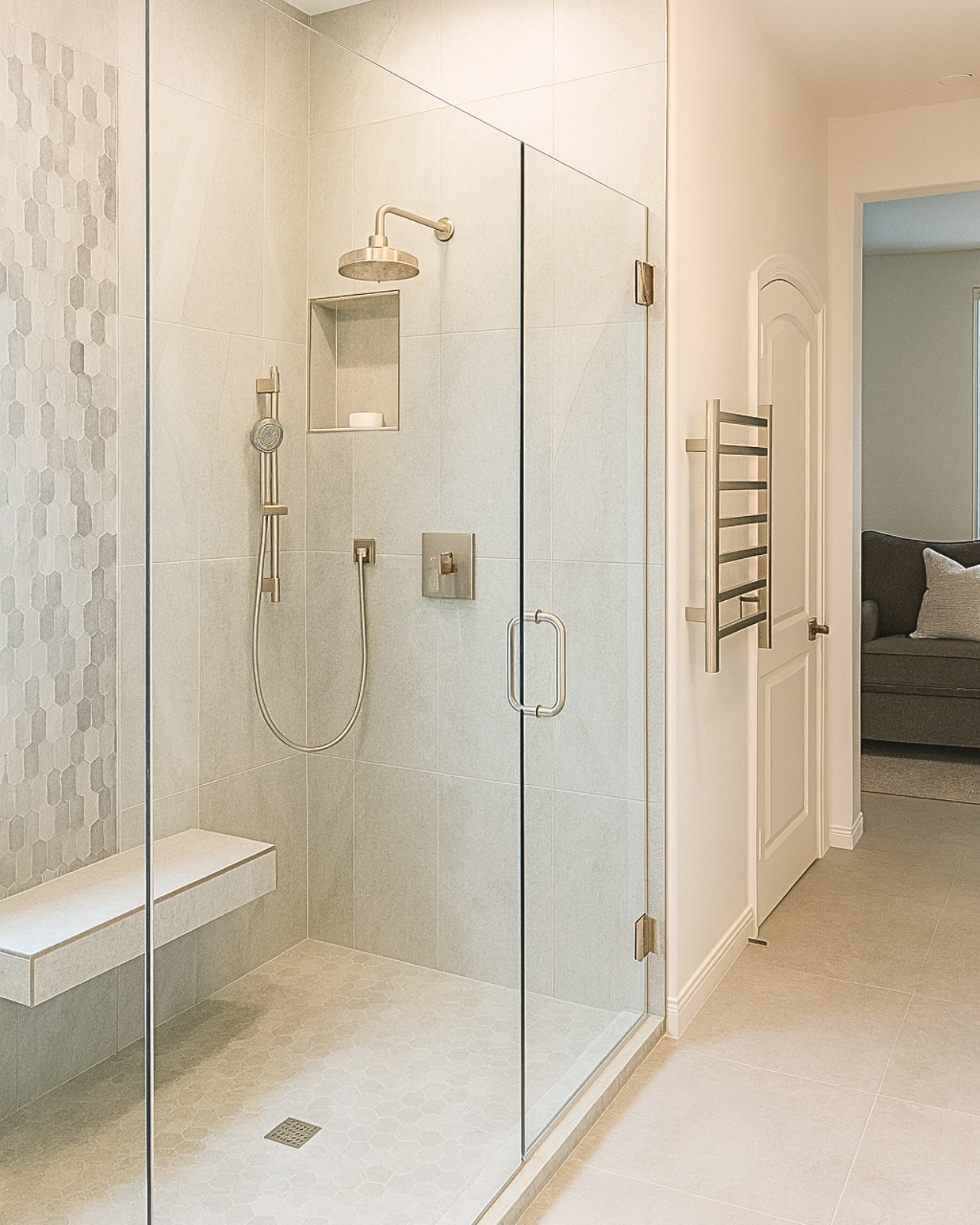
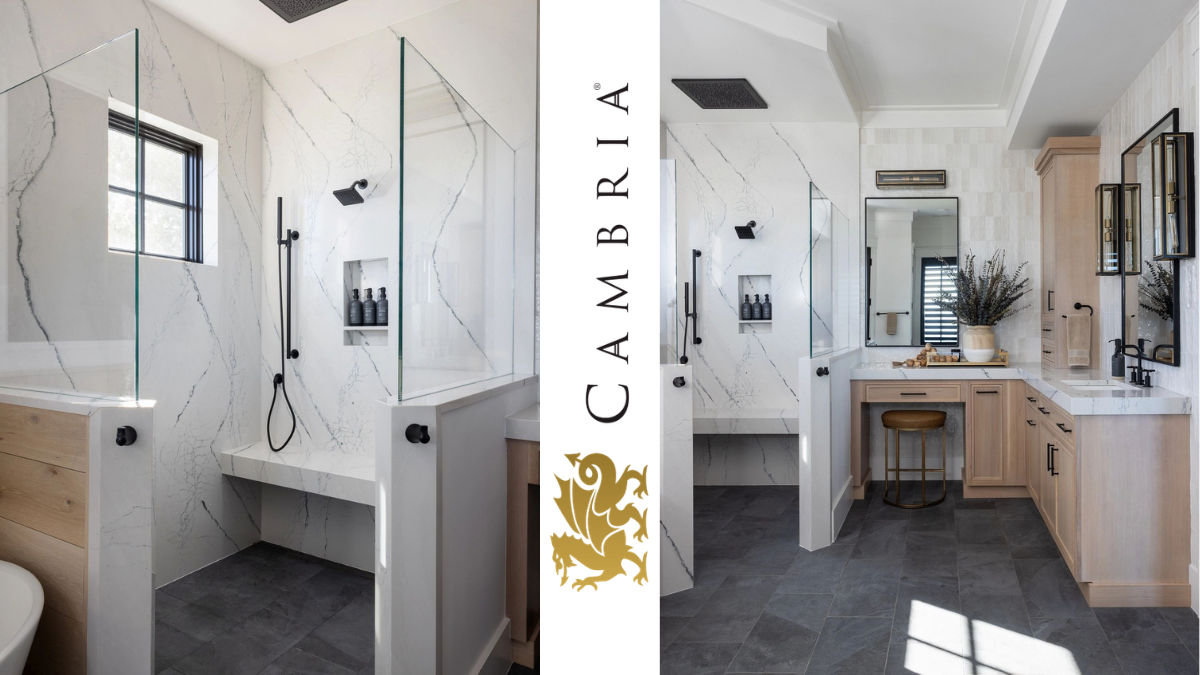
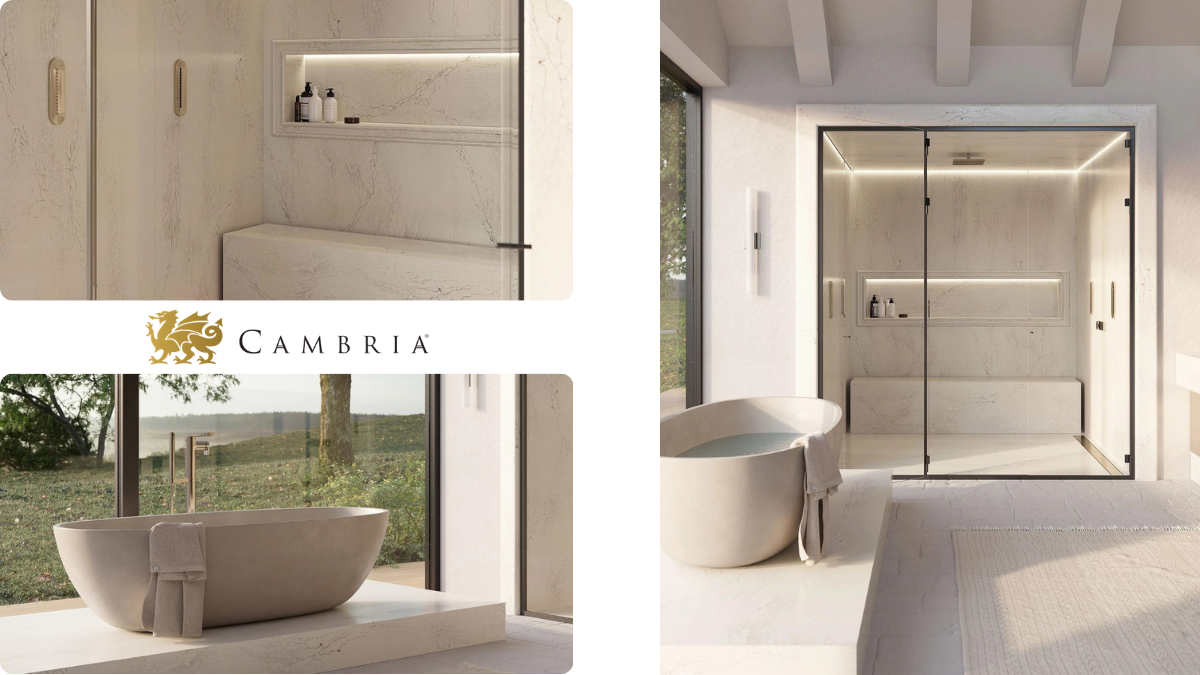
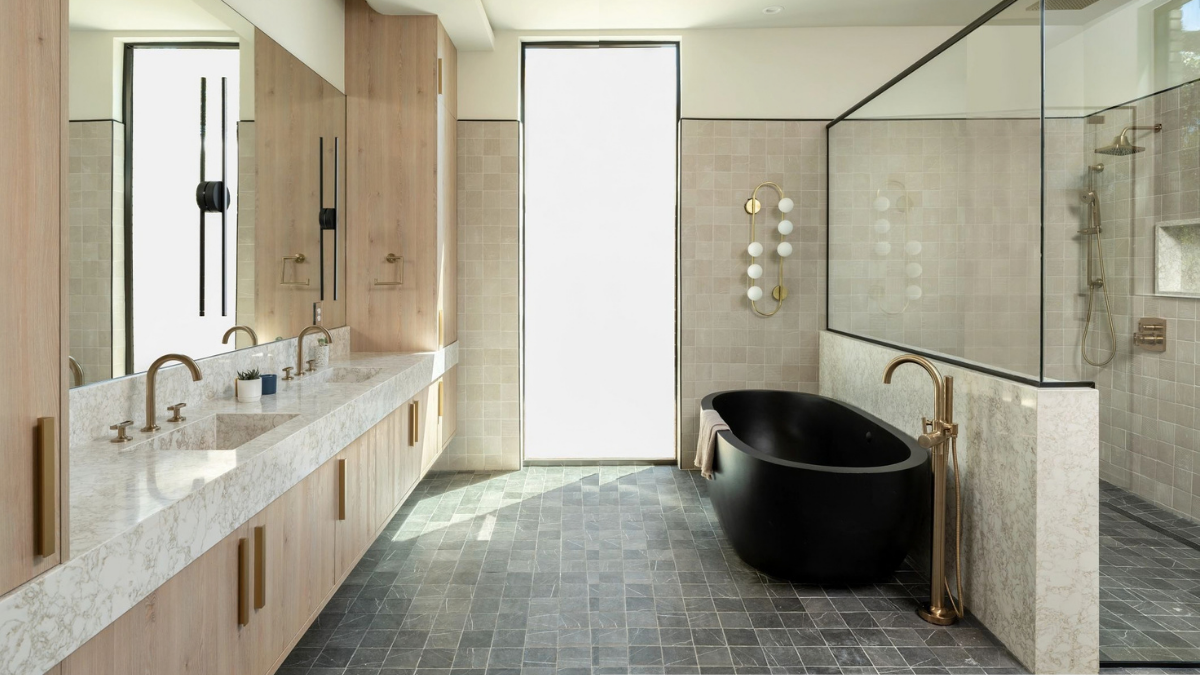
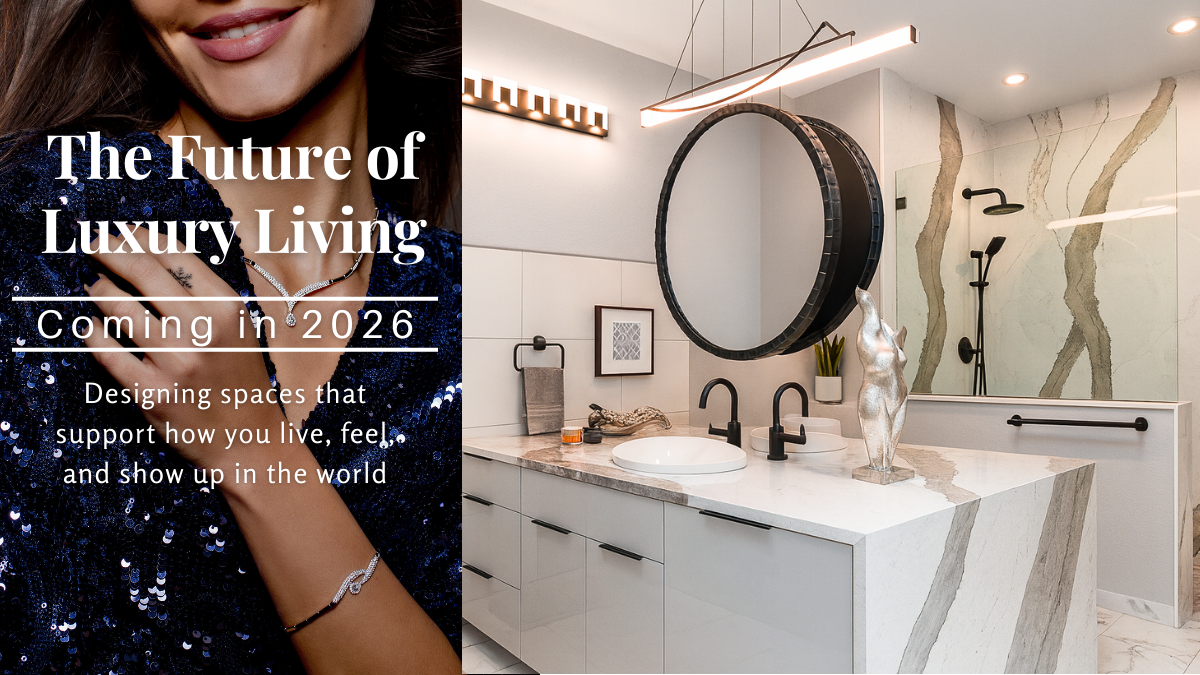
Imagine stepping into a shower surrounded on three sides by warm stone or richly textured tile. Light enters softly rather than exposing every surface. A recessed niche keeps necessities within reach without visual clutter. Perhaps a bench provides somewhere to sit beneath the water. Outside, layered lighting illuminates the vanity while a quieter source of light glows near the floor.
The experience feels private without feeling closed in.
That distinction is essential.
Refuge isn't about hiding from the world. It's about having somewhere you don't need to remain on alert to it.
The Case for the Enclosed Shower
For years, luxury bathroom photography has favored enormous expanses of frameless glass. Visually, they photograph beautifully. They make rooms appear larger and preserve expensive material selections.
But wellness design asks another question:
How does the shower actually feel when you're standing inside it?
There can be something deeply comforting about a shower with architectural enclosure. Walls help contain warmth, reduce visual exposure, and establish a room-within-a-room—a private environment dedicated to one simple ritual.
That doesn't mean returning to dark, cramped shower stalls. Refuge can be created with partial walls, clerestory glass, strategically positioned openings, integrated benches, niches, warm materials, and carefully layered lighting.
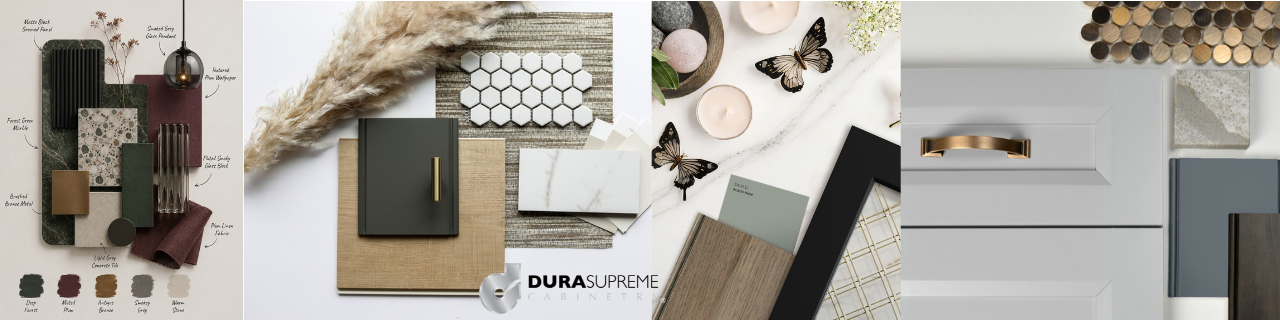
Lynn's talent for mixing material and texture becomes especially valuable here. Stone-inspired surfaces, tactile tile, natural pattern, wood tones, softly reflective metals, and organic variation can give an enclosed space tremendous richness without making it visually heavy.
The goal isn't to close the shower off. It's to make being inside it feel wonderful.
The Kitchen Has Refuge, Too
We tend to think about kitchens in terms of activity: cooking, entertaining, gathering, preparing, cleaning. But some of the most memorable kitchens also provide places where you can simply
be.
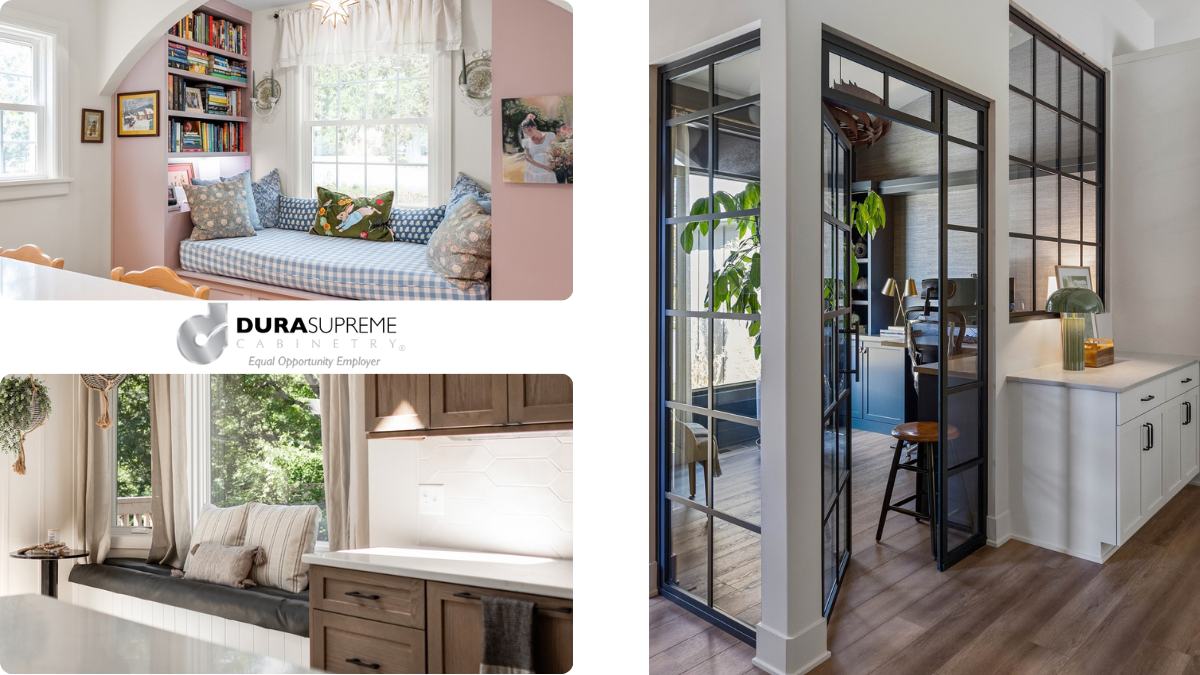
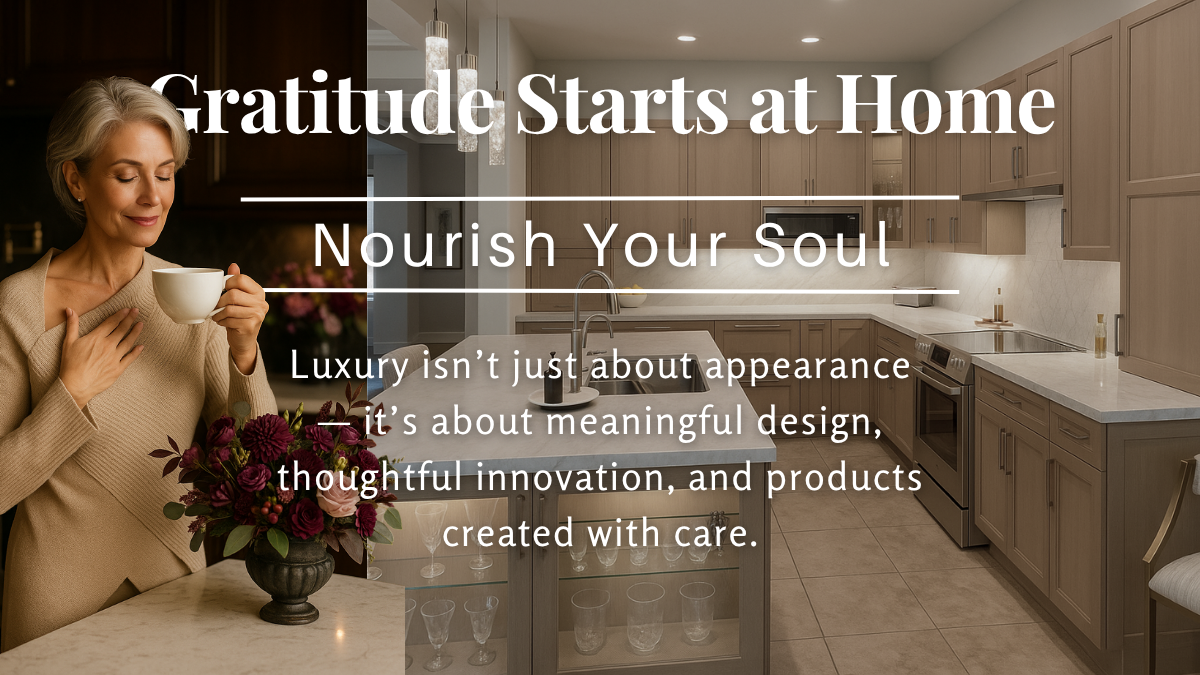
Consider a breakfast nook tucked beneath a window. A banquette wrapped around a corner. A pair of upholstered chairs positioned just beyond the working kitchen. A seat at the end of an island where someone can linger without entering the cook's circulation path. These aren't leftover spaces. They are destinations.
A successful seating nook creates intimacy without disconnecting us from the larger room. You can curl up with coffee while someone makes breakfast. A grandchild can color at the table while dinner is prepared nearby. Two friends can stay long after the plates have been cleared because the space itself seems to invite them to remain.
This is Refuge operating socially.
We feel protected without feeling separated.
Why the Best Seat Is Often Against the Wall
Think about your favorite restaurant.
There is a good chance the most desirable seats aren't floating in the center of the dining room.
- They're booths.
- Corners.
- Banquettes.
- Tables beside windows.
Places where the architecture provides some sense of boundary while allowing you to look outward.
We can use exactly the same principle at home.
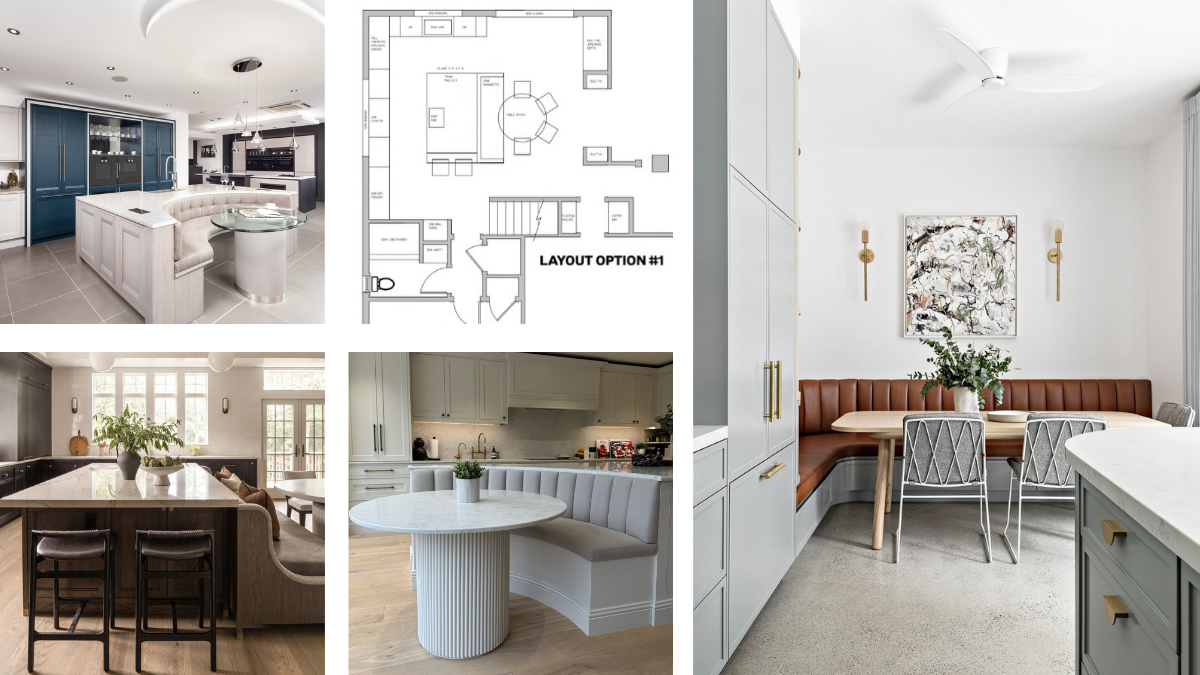
A banquette does something loose furniture often cannot: it makes the seating feel architecturally
claimed. Upholstery adds softness. A pendant lowers the perceived ceiling plane. A window provides Prospect while the surrounding cabinetry or walls provide Refuge.
Suddenly, a relatively small corner of the kitchen can become one of the most emotionally valuable places in the house. And that is an important luxury-design lesson:
The most beloved square footage isn't always the most impressive square footage.
When Material Becomes Shelter
Refuge can also be communicated without adding walls. Material itself can establish psychological boundaries.
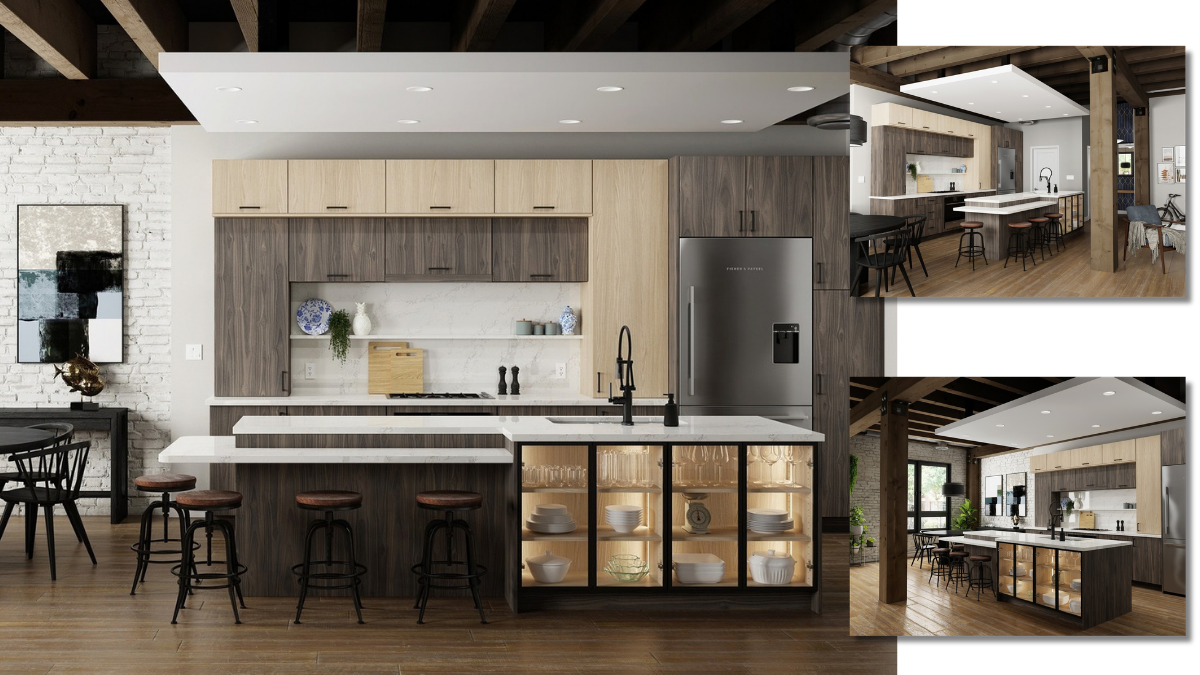
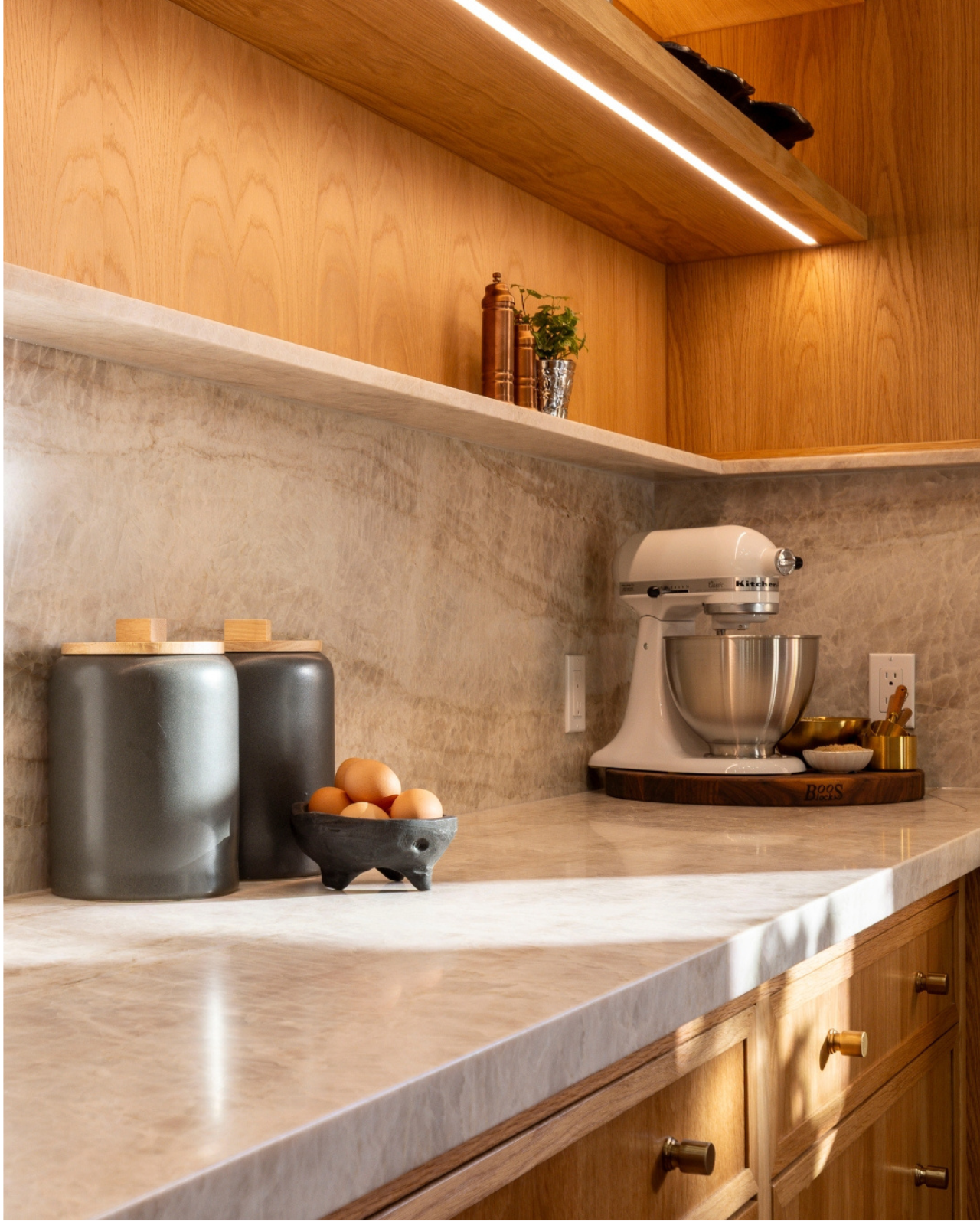
A change from stone flooring to warm wood beneath a breakfast nook can signal that you've entered a different kind of space. A textured tile wrapping the walls around a bathtub creates a visual embrace. Wood cabinetry surrounding a vanity introduces warmth and enclosure. A ceiling treatment above an island or banquette can define a protected zone within a much larger room.
This is where Lynn's fine-art background again becomes especially relevant.
An artist understands that negative space and boundaries are just as important as the objects within a composition. Color can advance or recede. Texture can establish depth. Light can reveal one area while allowing another to become quiet.
In a kitchen or bath, those same tools can be used to create
emotional architecture—places that don't merely look sheltered but feel sheltered.
Refuge Isn't Isolation
There is an important distinction here. A restorative home isn't one that separates us from other people. Often, the opposite is true. The best Refuge spaces allow us to remain connected
without requiring constant participation. A kitchen banquette lets a grandparent sit comfortably while grandchildren move through the room. A sheltered bathtub can overlook a private garden. A cozy seat near the kitchen lets one partner read while another prepares dinner.
You can be alone without being disconnected. You can participate without being at the center. You can retreat without disappearing.
That flexibility becomes increasingly valuable as homes accommodate multiple generations, changing routines, aging in place, grandchildren, guests, caregiving, work, and everyday family life.
Sometimes wellness means having a place where nothing is being asked of you.
Refuge and Gratitude: Creating Space to Notice Enough
Designing Somewhere to Return To
At Kitchens & Baths By Lynn, luxury isn't measured solely by how impressive a room appears when you enter it. It can also be measured by how deeply you want to return to it.
The shower that makes the end of the day feel softer. The breakfast nook everyone gravitates toward. The bathtub that feels removed from the rest of the world without actually being far from anything. The corner of the kitchen where conversations seem to last a little longer.
These are not accidental moments. They can be designed. Because sometimes the most meaningful thing a beautiful home can offer isn't another reason to look outward.
It's a place that makes you grateful to come back in.